Introduction
For a growing commercial embroidery or print shop, the single-needle vs multi-needle decision is a capacity decision - not a craft preference. It shapes how fast you turn multi-color logos, whether you can take hat and sleeve work profitably, and how soon you need a second head or multi-head floor.
Both machine types can stitch clean embroidery. Only multi-needle platforms are built to scale production with automatic color changes, higher sustained SPM, and free-arm geometry for caps and tubular goods. Dr. DTG has spent 23+ years helping shops make this call with demos, hands-on training, and long-term partnership support around Happy Japan Commercial Embroidery Machines and the Xtreme Tech Pro Series (XTPro 1401Ci, XTPro 1501 IPX, XTPro 1502IPX, XTPro XLS).
Key Takeaways
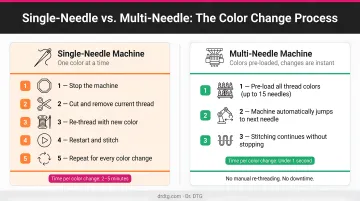
- Single-needle machines require a manual stop and rethread on every color change
- Multi-needle machines (6-15 needles) switch colors automatically and typically run 800-1,200+ SPM versus roughly 400 SPM on many single-needle units
- Growing commercial shops should treat multi-needle as the production baseline, not a distant upgrade
- Hat/cap embroidery, jackets, and multi-color uniforms favor free-arm multi-needle platforms
- Pair the machine with Isacord thread, needles, backings, bobbins, and certified repair for uptime
Single Needle vs Multi-Needle: Quick Comparison
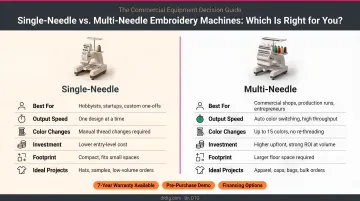
| Factor | Single-Needle | Multi-Needle |
|---|---|---|
| Price Range | ~$500-$1,800 (consumer) | ~$6,000-$22,000+ (semi-pro to commercial) |
| Stitching Speed | ~400 SPM (some higher) | 800-1,200+ SPM commercial |
| Color Changes | Manual stop + rethread | Automatic - needles pre-loaded |
| Design Footprint | Mostly flatbed; flat goods | Tubular/free-arm; caps, sleeves, bags |
| Best For | Samples, hobby, market tests | Growing shops, bulk orders, complex logos |
| Support Needs | Local sewing repair often enough | Certified commercial repair + training |
Price and Throughput Reality
Consumer single-needle units look affordable until you price operator time on a 6-color logo. Commercial multi-needle - Happy Japan Commercial Embroidery Machines and Xtreme Tech Pro Series heads - cost more upfront and repay that capital through fewer stops, higher daily piece counts, and less overtime.
Color Handling
Every color on a single-needle design is an interrupt. Multi-needle machines pre-load colors and sequence automatically so operators stay on hooping, QC, and packing - the work that actually moves revenue.
What Is a Single-Needle Embroidery Machine?
A single-needle machine uses one needle and one thread path. Each color change means stop, remove thread, rethread, resume. Baby Lock's comparison frames that as the defining trait of the category.
Where Single-Needle Still Fits
- Early skill building and samples
- Very low weekly volume with simple 1-3 color designs
- Testing demand before commercial capital
- Flat monograms and light personalization
The Production Bottleneck
As soon as multi-color corporate work and weekly volume arrive, manual rethread becomes a hard ceiling on output. Growing shops that stay on single-needle too long turn away orders or burn labor that multi-needle would free.
What Is a Multi-Needle Embroidery Machine?
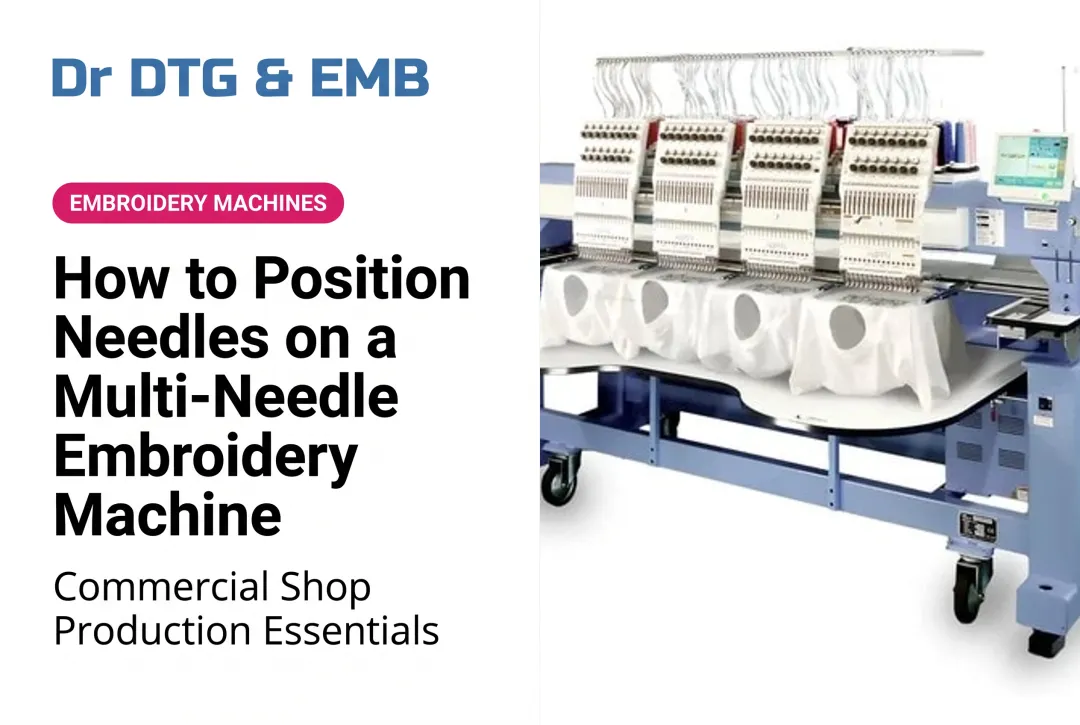
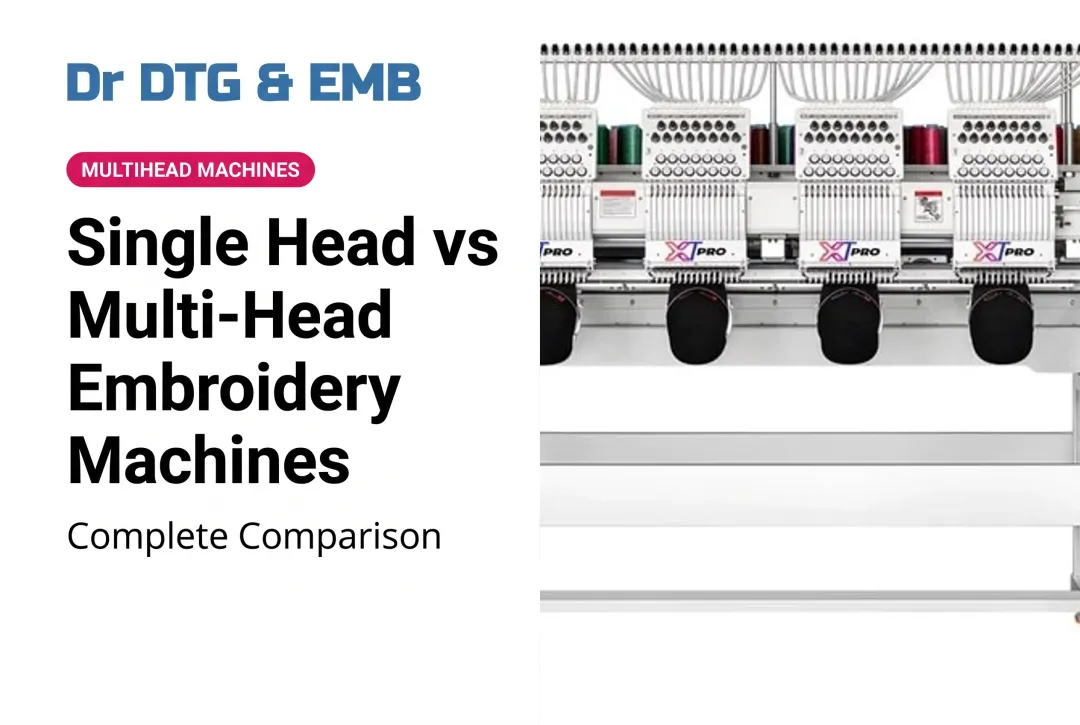
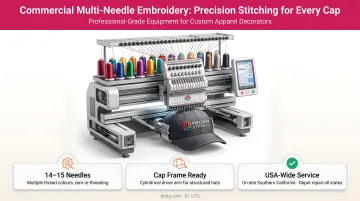
Multi-needle platforms carry 6 to 15+ needles, each with a different color. The head indexes automatically mid-design. That architecture is standard in professional commercial embroidery shops because it protects throughput and quality under daily load.
Business Outcomes Multi-Needle Delivers
- Eliminated color-change downtime
- Higher sustained output on multi-color logos
- Free-arm/tubular work for caps, sleeves, jacket backs, and bags
- Larger commercial embroidery fields
- Duty cycles built for long production days
Semi-Pro vs Commercial Multi-Needle
Semi-professional examples: Brother PR680W, Brother PR1055X, Janome MB-7 - useful bridges for lighter volume.
Commercial single-head examples growing shops should evaluate:
- Happy Japan HCH Plus - 7-needle compact commercial entry
- Happy Japan HCD3E-X1501 - 15 needles, 1,200 SPM class, large commercial field
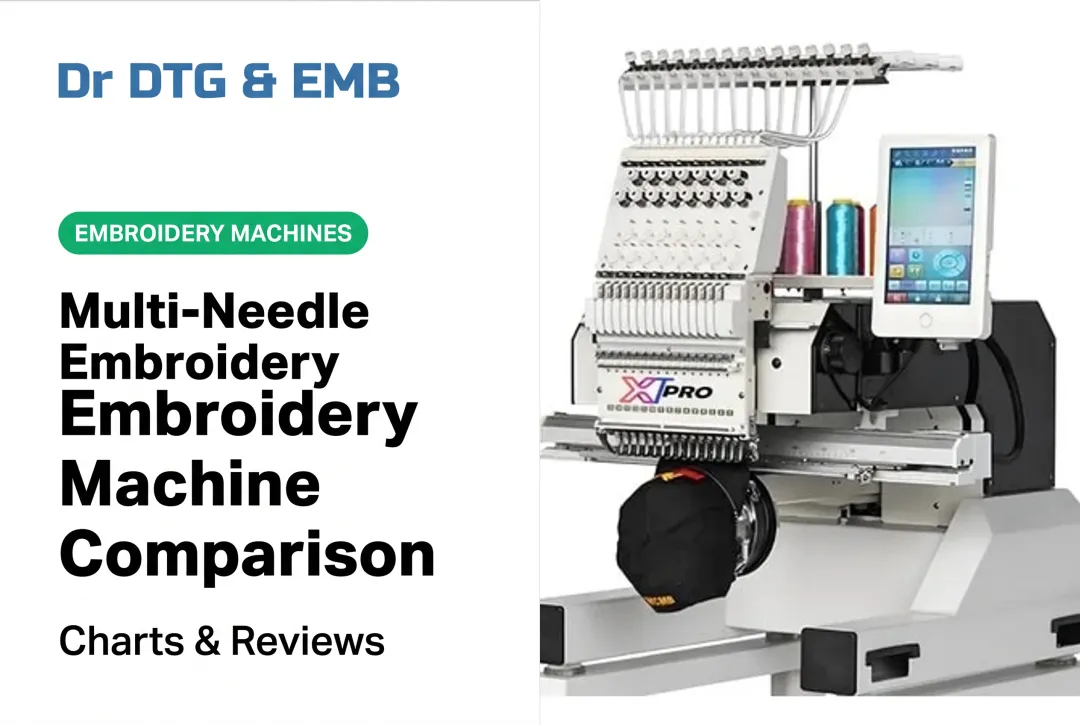
- Xtreme Tech Pro Series XTPro 1401Ci - 14-needle entry commercial
- Xtreme Tech Pro Series XTPro 1501 IPX - 15-needle IPX presser foot control
- Path to XTPro 1502IPX (2-head) and XTPro XLS (large area) as volume scales
Dr. DTG carries Happy Japan Commercial Embroidery Machines and the full Xtreme Tech Pro Series with 7-year warranty options, pre-purchase demos, hands-on training, and certified repair.
Multi-Needle Use Cases
- Bulk corporate uniforms
- Team and sports apparel
- Multi-color logos (4+ colors)
- Cap and hat embroidery
- Jacket backs and sleeve placements
- Any run where turnaround time is a sales promise
Graphic Reflections founder Sheri Blackiston, profiled in Impressions Magazine, describes the familiar path: one machine purchase sparks upgrades as services diversify - the pattern most growing shops follow.
Which Machine Fits Your Shop Right Now?
Stay Single-Needle Only If
- You are still validating demand with low weekly stitch counts
- Designs stay simple and mostly flat garments
- Capital must stay minimal for a short test window
- Manual color changes do not yet create a bottleneck
Choose Multi-Needle When
- Orders are consistent and late deliveries hurt reputation
- Designs regularly use 4+ colors
- You need caps, sleeves, bags, or other 3D items
- You want more pieces per day without adding headcount
- You are planning a path toward multi-head production on Happy Japan or Xtreme Tech Pro Series platforms
The Natural Upgrade Path
Many shops sample on single-needle, then move to multi-needle commercial. Dr. DTG's trade-in program can apply existing equipment value toward Happy Japan or Xtreme Tech Pro Series platforms so capital stays in the business.
Thread and Supplies for Either Path
Run production on Isacord 40wt polyester - Dr. DTG is USA Master Distributor with the full 390-color catalog. Stock matched needles, cut-away and tear-away backings, and bobbins. Hybrid print shops can also order DTG inks and pre-treatments through the same long-term partnership.
Conclusion
Single-needle is a low-risk sample tool. Multi-needle is the production investment that lets a commercial embroidery or print shop scale, take multi-color work, and open hat revenue without drowning in rethread labor.
Dr. DTG has helped shops make this decision for 23+ years - with Happy Japan Commercial Embroidery Machines, the Xtreme Tech Pro Series (XTPro 1401Ci, XTPro 1501 IPX, XTPro 1502IPX, XTPro XLS), Isacord supplies, hands-on training, and certified repair. Book a demo, consult a technician, or order supplies at 714-770-0969 or info@drdtg.com.
Frequently Asked Questions
Which is better for a growing shop?
Multi-needle for consistent multi-color volume, hats, and commercial duty cycles. Single-needle only for early samples or true hobby volume.
Can single-needle do multiple colors?
Yes, with manual rethread each time. Two or three colors is workable; five-plus colors on daily volume is where multi-needle pays for itself.
How many needles do commercial multi-needle machines have?
Typically 6-15. Happy Japan HCD3E-X1501 and XTPro 1501 IPX run 15 needles for complex logos without mid-job rethread.
Is multi-needle worth it for a home-based commercial shop?
Yes when orders are consistent. Compact commercial options like Happy Japan HCH Plus and XTPro 1401Ci are built for space-limited production, not hobby sewing rooms.
What is the price difference?
Consumer single-needle often $500-$1,800. Commercial multi-needle single-heads commonly start near $6,000 and scale past $13,000-$22,000+ depending on configuration. Quote training, warranty, and supplies together.