Introduction
Buying a commercial embroidery machine as a growing shop is complicated for a reason: spec sheets look alike, dealer packages differ wildly, and many online "reviews" skip the operational details that decide whether a head earns its keep - uptime, hat capability, training, and certified repair.
This guide is written for commercial embroidery and print shops scaling production or preparing for multi-head. It covers Happy Japan Commercial Embroidery Machines from starter single-heads to multi-head floors, real ownership factors, and how Dr. DTG pairs Happy Japan with the Xtreme Tech Pro Series (XTPro 1401Ci, XTPro 1501 IPX, XTPro 1502IPX, XTPro XLS) so you can compare production paths under one long-term partnership.
Key Takeaways
- Happy Japan Inc. has manufactured commercial embroidery equipment for a century-class industrial history - parts longevity and commercial duty cycles matter
- US dealer pricing typically spans entry single-heads near the high four figures through multi-head commercial systems in the tens of thousands
- 15-needle single-heads (HCD3E / HCU2 class) and multi-head HCR3 configurations are the core growth path for production shops
- Dealer support - demos, hands-on training, OEM parts, field technicians - is as important as needle count
- Run Happy Japan heads on Isacord thread with matched needles, backings, and bobbins for fewer breaks and less downtime
Who Makes Happy Japan Embroidery Machines?
Happy Japan machines are built by Happy Japan Inc. (Yamagata, Japan), with roots dating to 1923 and a modern corporate structure formed in 2014. Their company profile lists manufacture, sale, and repair of industrial sewing and embroidery machines - not a rebadge of home equipment.
Market Positioning for Growing Shops
Happy Japan occupies a useful middle ground in the commercial embroidery machine market. Happy Japan Commercial Embroidery Machines sit between light home multi-needle units and ultra-enterprise factory systems. They fit:
- Shops moving off entry equipment into sustained commercial duty
- New commercial owners who need production output without 50-head complexity
- Contract and custom apparel businesses that need reliable throughput without six-figure multi-head commitments on day one
US Distribution and Dealer Choice
Texmac is the nationwide distributor. Authorized dealers - including Dr. DTG in Brea, California - layer training, warranty packaging, parts, and service. For a production buyer, that dealer layer is part of the machine decision.
Happy Japan Model Lineup for Commercial Growth
| Model | Needles | Flat Field (approx.) | Max SPM (Flat) | Role for Growing Shops |
|---|---|---|---|---|
| Journey / HCH-701P / HCH Plus | 7 | ~11.4" x 11.2" | ~1,000 | Compact commercial entry |
| HCS3-1201 Voyager | 12 | ~11.4" x 11.2" | ~1,000 | Mid needle flexibility |
| HCD3 / HCD3E-X1501 | 15 | ~20.5" x 15.7" | ~1,200 | Core multi-color workhorse |
| HCU2-1501 | 15 | ~23.6" x 15.7" | ~1,500 | High-output single-head |
| HCR3 multi-head (2-12) | 15/head | Large commercial | ~1,200 | Batch / multi-head scale |
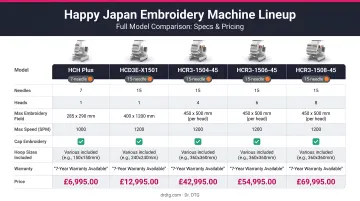
Dealer pricing varies by package, cap kits, and availability - always quote current commercial terms.
Starter Commercial: HCH Plus and Voyager Class
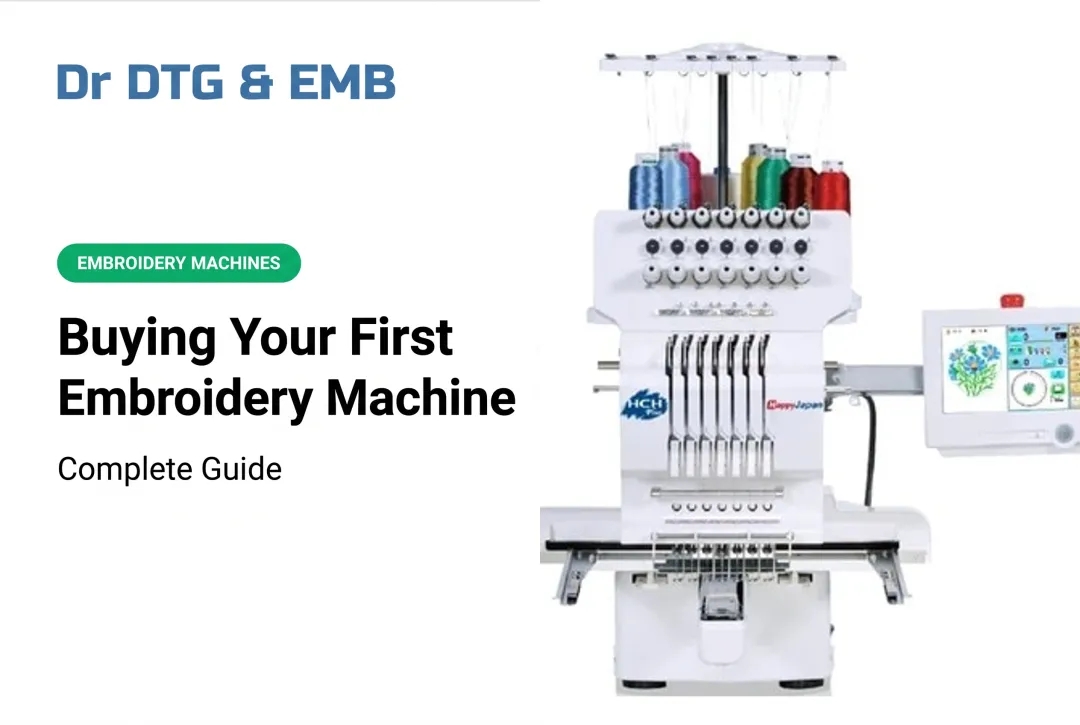
7- and 12-needle single-heads fit space-limited shops taking paid work. Most commercial logos use a modest color count; 7 needles already removes the worst single-needle bottlenecks. Dr. DTG's HCH Plus handles flats, caps (with cap frame), and 3D puff for home-business and startup commercial floors.
Mid-Tier Workhorses: HCD3E and HCU2
HCD3E-X1501 is the 15-needle single-head many growing shops standardize on - complex uniforms and multi-color logos without mid-run rethread, large flat field, and cap embroidery support.
HCU2-1501 pushes wider field and higher flat SPM for high-output single-head production, with substantial design memory and network connectivity for multi-machine shops.
Multi-Head: HCR3 Series
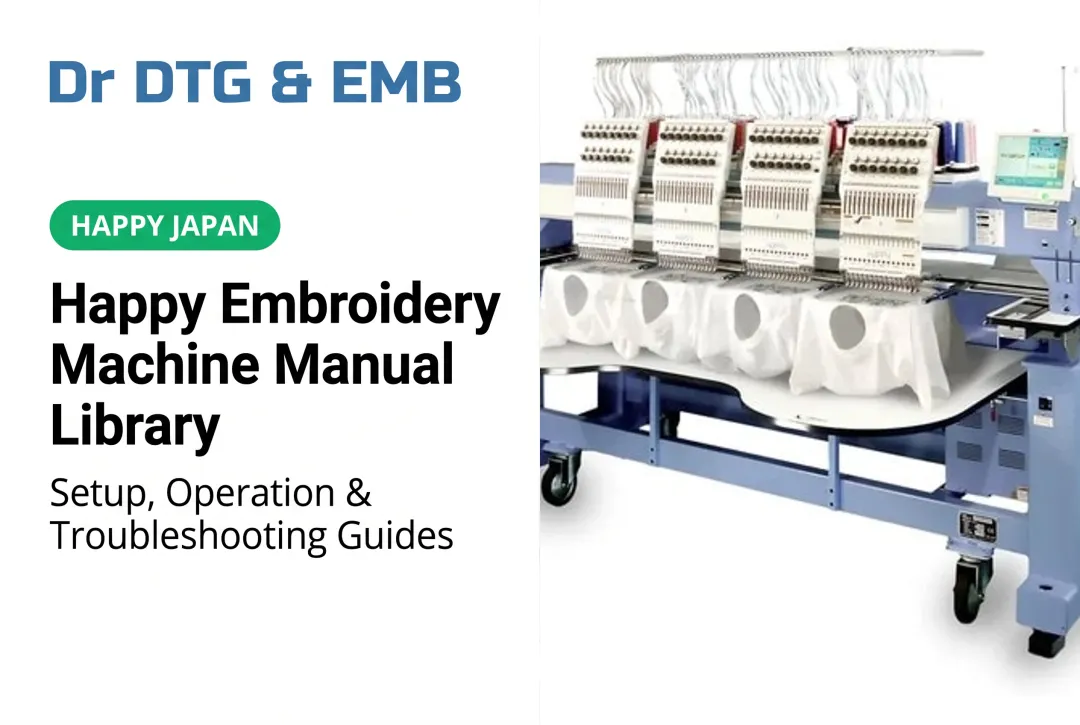
HCR3 scales from 2 to 12 heads. The HCR3-1504-45 (4-head) that Dr. DTG carries embroiders four garments at once - the step that changes labor cost per piece for contract and uniform accounts. Pair multi-head strategy with single-head flexibility (see our single-head vs multi-head guide).
Features That Matter in Daily Production
Controls and Connectivity
- 7" LCD on many single-heads; larger touchscreens on multi-head
- Large stitch/design memory on commercial tiers
- USB and LAN (HappyLAN networking for multi-machine floors)
- On-screen editing that keeps operators productive without a PC at every head
Field Geometry and Hats
Wider fields (HCD3 / HCU2 class) open jacket backs, polo work, and large placements. Cap kits enable hat revenue - a high-demand channel for commercial shops. Confirm cap hardware in your package before comparing street prices.
Warranty and Certified Repair
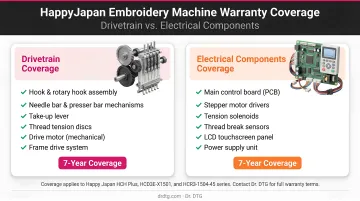
Dr. DTG's published warranty packaging emphasizes multi-year coverage on critical drive components with defined electrical terms - always get component-level detail in writing. Other dealers advertise different headline years; the usable difference is parts on hand and technicians who know Happy Japan Commercial Embroidery Machines.
Real-World Performance and Maintenance
Speed vs Net Throughput
Max SPM is not net capacity. Trim speed, color-stop count, fabric, metallic thread, and hat geometry decide pieces per shift. A well-supported head running stable tensions on Isacord often out-produces a "faster" neglected machine.
Stitch Quality and Uptime
Servo drive, solid needle bar construction, and disciplined maintenance (oil schedules, needle changes, clean hook areas) keep registration tight across long runs. Owner-level care handles most routine work; certified repair handles timing, sensors, and electronics.
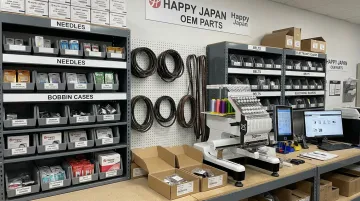
Dr. DTG stocks OEM replacement parts for Happy Japan machines in Brea - needles, bobbin cases, hooks, belts, sensors, boards - with SoCal on-site service and nationwide depot repair.
Happy Japan vs Brother, Tajima, and Ricoma
vs Brother
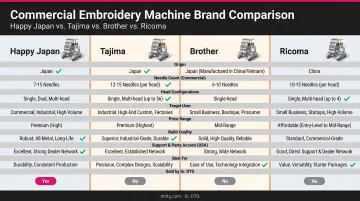
Brother PR-series multi-needle units (often 10 needles, smaller fields) suit light studios. Growing commercial shops usually outgrow that class on field size, needle count, and industrial duty cycle - Happy Japan 15-needle commercial heads are built for sustained production.
vs Tajima
Tajima remains a premium industrial brand with dense service networks in some markets and quote-based pricing. Happy Japan often delivers comparable commercial stitch quality with more transparent dealer packaging and lower entry capital - strong for shops still scaling. See our full Happy Japan vs Tajima comparison.
vs Ricoma
Ricoma publishes visible commercial pricing and competes hard on entry price. Evaluate total cost of ownership: warranty depth, parts, technician access, and durability at full commercial intensity. Many production buyers choose Happy Japan plus Dr. DTG support when uptime over 5-10 years is the real KPI.
Pricing, Where to Buy, and Parallel Path: Xtreme Tech Pro Series
Quote entry single-heads, 15-needle workhorses, and multi-head systems with cap kits, training, and warranty included in the comparison - not bare frames.
What to demand from a dealer:
- Pre-purchase demo and hands-on operator training
- OEM parts inventory
- In-house certified repair (not only third-party referrals)
- Written warranty component breakdown
- Supply continuity: Isacord thread, needles, backings, bobbins
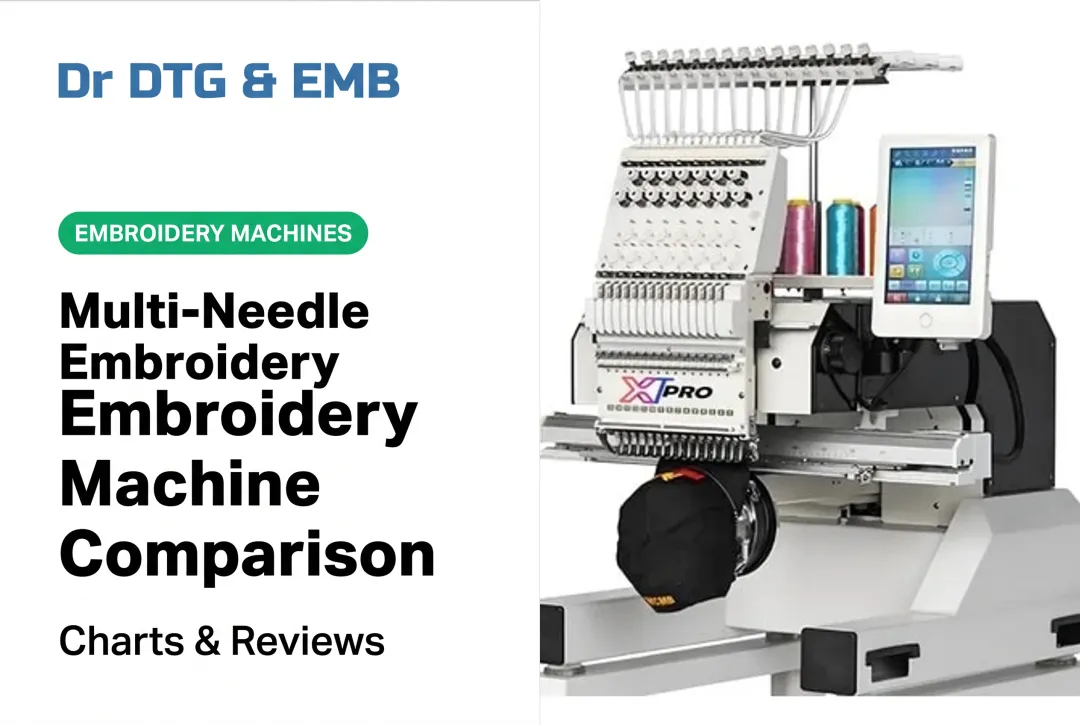
Dr. DTG (Brea, CA) carries HCH Plus, HCD3E-X1501, and HCR3-1504-45 with demos and training included, trade-in programs, and financing. The same partnership offers the Xtreme Tech Pro Series - XTPro 1401Ci, XTPro 1501 IPX, XTPro 1502IPX, XTPro XLS - so you can compare Japanese Happy Japan reliability with XTPro IPX presser-foot and multi-head paths side by side.
Book a demo, consult a technician, or order Isacord supplies at 714-770-0969 or info@drdtg.com.
Thread Quality
Isacord 40wt polyester is engineered for high-speed commercial running. Dr. DTG stocks the full 390-color catalog as USA Master Distributor - the same partner that trains your operators and services your heads.
Frequently Asked Questions
Who makes Happy Japan machines?
Happy Japan Inc., Japan (est. 1923). US distribution via Texmac; authorized dealers such as Dr. DTG add training, parts, and service packages.
How much is a Happy Japan machine?
Entry commercial single-heads often start near the high four figures; 15-needle and multi-head systems scale into the tens of thousands depending on configuration. Always quote current dealer packages.
Best Happy Japan for a growing shop?
HCH Plus for compact starts; HCD3E-X1501 for full multi-color commercial single-head production; HCR3 multi-head when same-design batches justify it.
Happy Japan vs Brother?
Brother PR multi-needle suits lighter use. Happy Japan Commercial Embroidery Machines target sustained commercial fields, 15-needle flexibility, and production duty cycles.
What warranty should I expect?
Terms vary by dealer. Get component-level coverage in writing and prioritize parts + technician access over headline years alone.
Can I run metallics and specialty threads?
Yes - manage needle speed and tension. Quality Isacord polyester remains the daily production baseline for fewer breaks.