Dr. DTG has spent 23+ years helping shops scale from first commercial head to multi-head floors. This guide walks growing operators through machine types, the specs that drive revenue, essential supplies (Isacord thread, needles, backings, bobbins), and how to buy with hands-on training and long-term partnership support - not a one-time shipment.
Key Takeaways
- Growing shops should start on commercial multi-needle platforms, not hobby single-needle units they will outgrow in months
- Embroidery field size and needle count set hard limits on logo size and color throughput - aim for commercial field flexibility and 14-15 needles when volume is rising
- Budget for Isacord thread, needles, backings, and bobbins as recurring production costs, not afterthoughts
- Warranty length, certified repair, and field-technician access matter as much as SPM ratings for uptime
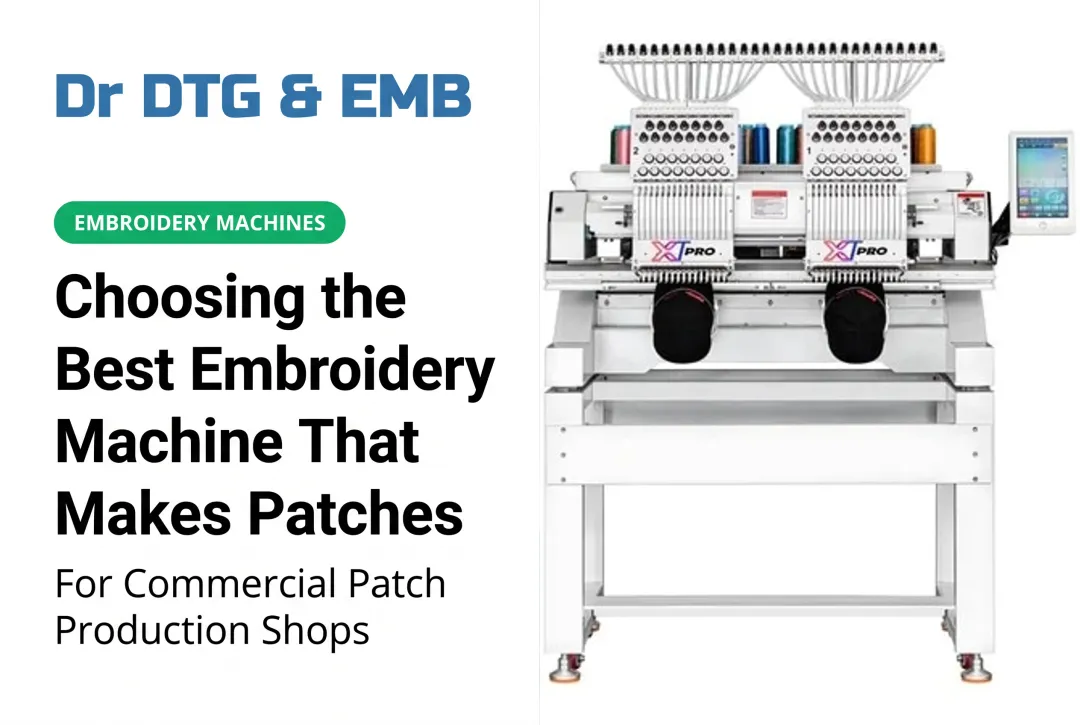
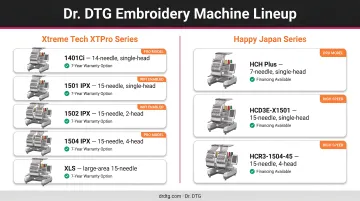
- Happy Japan Commercial Embroidery Machines and the Xtreme Tech Pro Series (XTPro 1401Ci, XTPro 1501 IPX, XTPro 1502IPX, XTPro XLS) are built for shops scaling production or stepping into multi-head
What Commercial Shops Need From an Embroidery Machine
A computerized embroidery machine runs programmed stitch files so your team can reproduce logos, uniforms, and branded apparel at production speed. For a commercial embroidery or print shop, the machine is capacity infrastructure - similar to adding another press or DTG line - built for decorative production output.
Single-Needle vs Multi-Needle for Growing Shops
Single-needle machines require a manual stop and rethread on every color change. That is workable for samples; it becomes a labor tax once you run multi-color corporate logos all day. Multi-needle machines hold 6-15+ colors at once and sequence automatically, which is why growing shops treat multi-needle as the production baseline - not a later upgrade. See our full comparison of single-needle vs multi-needle embroidery machines.
Specs That Drive Business Outcomes
- Embroidery field and hoop: Field size caps the largest design per hooping. Small fields force re-hooping and registration risk on jacket backs and large panels.
- Needle system: More needles mean fewer mid-job stops, faster multi-color turnaround, and lower cost per piece.
- Connectivity and software: USB, LAN, and Wi-Fi transfer keep digitized files moving from your art desk to the head without friction.
- Cap and tubular capability: Hat and sleeve work is high-demand revenue. Machines with commercial cap frames and free-arm geometry unlock that channel.
Key Factors When Buying Your First Commercial Machine
Embroidery Field Size
| Field Size | Business Use |
|---|---|
| 4x4 inches | Small emblems only - quickly becomes a bottleneck |
| 5x7 inches | Left-chest logos and mid-size work |
| 8x12 inches | Full chest and larger placements |
| 12x14+ inches | Jacket backs, large panels, multi-piece layouts |
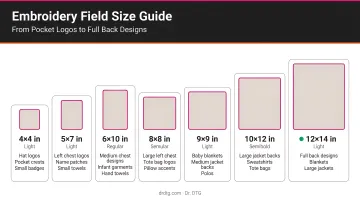
Growing shops should buy for the jobs they want to win in 12-24 months, not only today's monograms. Under-buying field size is one of the costliest first-machine mistakes.
Stitch Speed and Throughput
Commercial multi-needle platforms typically run 800-1,500+ SPM on flats. Happy Japan Commercial Embroidery Machines and Xtreme Tech Pro Series heads are built for sustained daily duty cycles - the difference between finishing a corporate run before cutoff and carrying overtime into the next shift.
Total Cost of Ownership
Do not judge machines on purchase price alone. Factor:
| Category | Typical Range |
|---|---|
| Entry commercial multi-needle (7-14 needles) | ~$7,000-$13,000 |
| Full commercial multi-needle (15 needles) | ~$13,000-$19,000+ |
| Multi-head step-up (2-head+) | Quote-based - plan for higher capital |
Add recurring production supplies: Isacord 40wt polyester thread, cut-away and tear-away backings, embroidery needles, and bobbins. Quality consumables reduce breaks, rework, and downtime - which is real margin, not just cleaner stitches.
Warranty, Training, and Certified Repair
For a production shop, support is capacity insurance:
- Multi-year warranty options (Dr. DTG offers up to 7 years on qualifying lines)
- Hands-on training so operators are productive from day one
- Certified repair with OEM parts and field-technician or depot options
- A dealer who stocks Isacord, needles, backings, and bobbins - so machine and supplies stay under one partnership
Essential Supplies for Commercial Output
Isacord Thread
Isacord 40wt polyester is the commercial standard for high-speed multi-needle work - abrasion resistant, colorfast, and built for industrial laundering. Dr. DTG is the USA Master Distributor, stocking the full 390-color catalog in 1,000m and 5,000m spools so growing shops can order production quantities without middleman delays.
Needles, Backings, and Bobbins
- Needles: Match size and point to fabric and thread (e.g. 75/11 for standard 40wt; heavier options for caps and dense work). Groz-Beckert commercial needles are stocked for Happy Japan and Xtreme Tech Pro Series platforms.
- Backings (stabilizers): Cut-away for knits and dense logos; tear-away for stable wovens; specialty toppings for textured goods.
- Bobbins: Use embroidery-specific bobbin thread and correct Style L/M cases so tension stays consistent across long runs.
Shops that also run garment printing can source DTG inks and pre-treatments from the same partner relationship - keeping embroidery and print production aligned under one supply chain.
Happy Japan and Xtreme Tech Pro Series for First Commercial Buys
Dr. DTG, based in Brea, CA, has guided commercial buyers for 23+ years with BBB A+ accreditation and a focus on long-term partnerships - not one-and-done sales.
Xtreme Tech Pro Series
- XTPro 1401Ci - 14-needle entry commercial single-head for shops stepping off hobby equipment
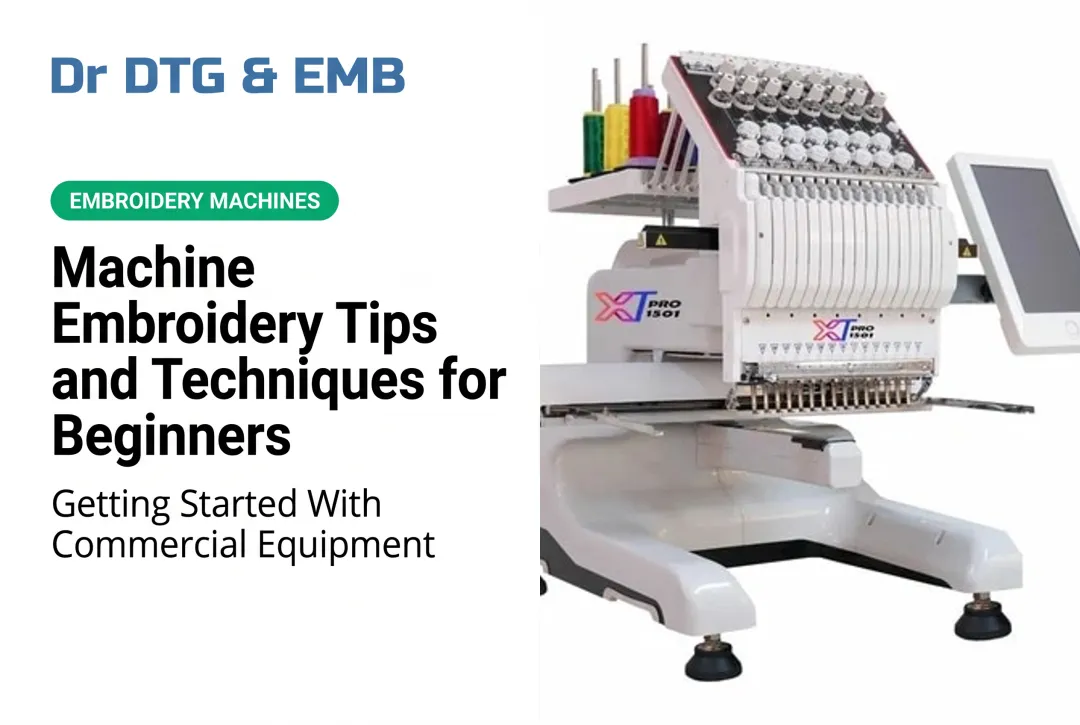
- XTPro 1501 IPX - 15-needle single-head with Independent Presser Foot Control for mixed materials, caps, and dense work
- XTPro 1502IPX - 2-head configuration when order volume justifies doubling simultaneous output
- XTPro XLS - large-area production for oversized panels and high-visibility placements
Happy Japan Commercial Embroidery Machines
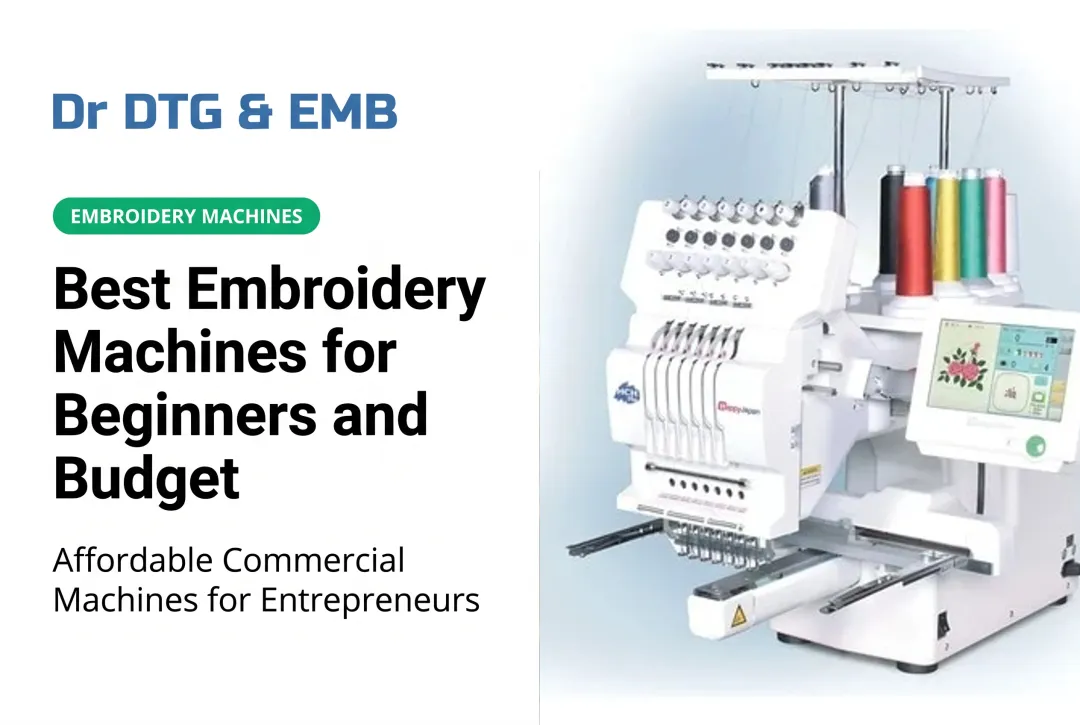
- HCH Plus - compact 7-needle path for space-limited startups still taking paid commercial work
- HCD3E-X1501 - 15-needle single-head workhorse for complex multi-color logos
- HCR3 multi-head options - scale to batch production when B2B volume arrives
Both lines are backed by pre-purchase demos, on-site training, trade-in paths, financing, and certified repair with OEM parts.
Ready to scale? Book a demo, consult a technician about your current order mix, or order Isacord thread and supplies. Call 714-770-0969 or email info@drdtg.com.
Conclusion
Your first commercial embroidery machine should match the shop you are building - multi-color volume, hat capability, less downtime, and a partner who trains your team and stocks the thread, needles, backings, and bobbins you run every day. Happy Japan Commercial Embroidery Machines and the Xtreme Tech Pro Series (XTPro 1401Ci, XTPro 1501 IPX, XTPro 1502IPX, XTPro XLS) give growing commercial embroidery and print shops a clear path from first head to multi-head production.
Dr. DTG has spent 23+ years making that path practical: hands-on training, certified repair, and long-term partnerships. Book a demo or consult a technician before you buy - the right first machine is the one that still earns its keep two years from now.
Frequently Asked Questions
What do I need to know before buying a commercial embroidery machine?
Clarify order volume, multi-color complexity, hat demand, and floor space. Then evaluate field size, needle count, warranty, certified repair access, and total supply cost (Isacord thread, needles, backings, bobbins) - not just machine price.
What is a good first machine for a growing commercial shop?
A commercial multi-needle platform such as the Happy Japan HCH Plus or HCD3E-X1501, or the Xtreme Tech Pro Series XTPro 1401Ci / XTPro 1501 IPX. Buy for production, not hobby limits.
Is it hard to run a multi-needle machine?
Modern commercial controls are approachable, but hooping, tension, stabilizer choice, and cap work take practice. Hands-on training from your dealer shortens that ramp and protects uptime.
Is a commercial embroidery machine worth it?
For shops taking consistent paid orders, multi-needle throughput, automatic color changes, and lower labor per piece typically repay the investment faster than stretching hobby equipment past its duty cycle.
How much should I budget?
Plan commercial multi-needle pricing in the roughly $7,000-$19,000+ range for single-head production, plus digitizing software and recurring Isacord thread, backings, needles, and bobbins. Multi-head configurations are quote-based - book a demo to match capital to volume.