Buy multi-head before volume justifies it and you carry overhead your revenue cannot support. Stay single-head too long and you turn away B2B runs or burn overtime. Dr. DTG has spent 23+ years guiding shops through that transition with Happy Japan Commercial Embroidery Machines and the Xtreme Tech Pro Series (XTPro 1401Ci, XTPro 1501 IPX, XTPro 1502IPX, XTPro XLS), plus hands-on training and certified repair.
Key Takeaways
- Single-head machines work one garment at a time; multi-head machines run the same design on several garments at once
- Single-head fleets offer design flexibility and independent uptime - ideal while order mix is varied
- Multi-head reduces cost-per-piece at volume but needs space, capital, and disciplined maintenance
- A thread break on a traditional multi-head can stop every head; independent single-heads keep other units running
- Most established shops run a hybrid: single-head for custom work, multi-head for B2B batches
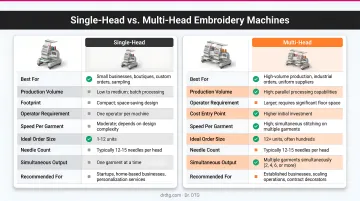
Single-Head vs Multi-Head: Quick Comparison
| Feature | Single-Head | Multi-Head |
|---|---|---|
| Purchase Cost | Lower per unit | Higher upfront capital |
| Production Output | One garment per run | 2-12+ garments simultaneously |
| Design Flexibility | High - switch designs easily | Low - all heads share one design |
| Space | Compact | Dedicated production floor |
| Downtime Risk | One stoppage affects one unit | One issue can halt the whole multi-head run |
| Best For | Growing shops, custom mix, samples | High-volume same-design batches |
What Is a Single-Head Embroidery Machine?
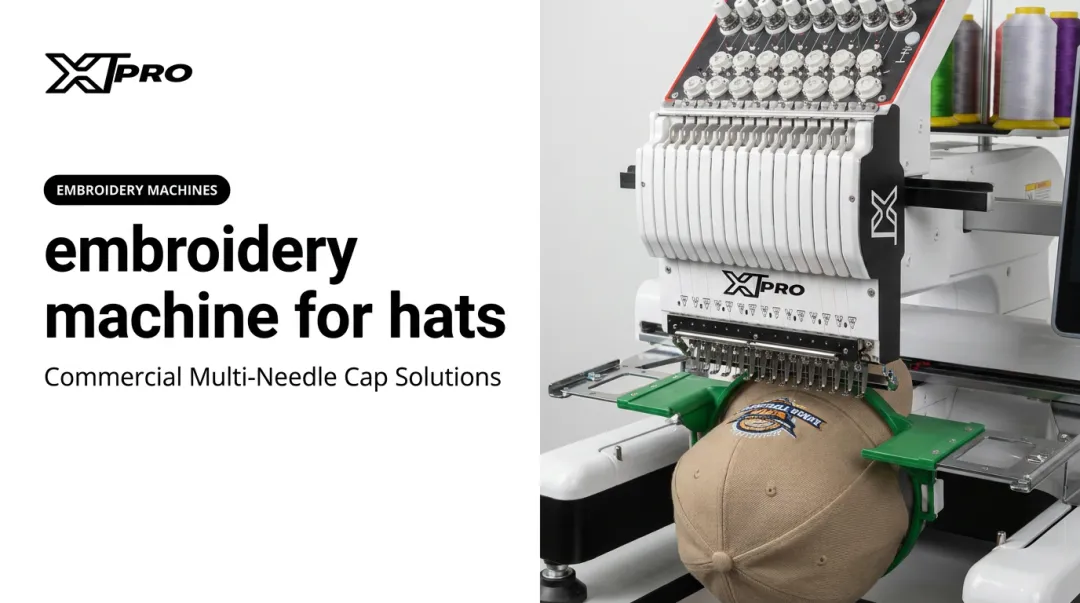
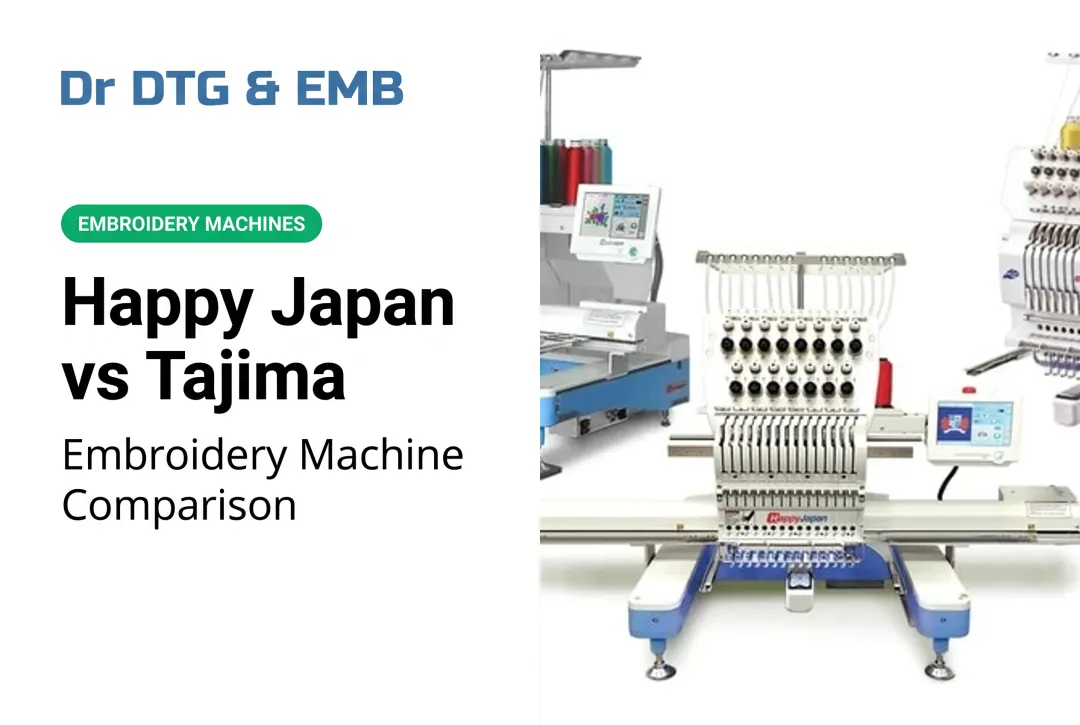
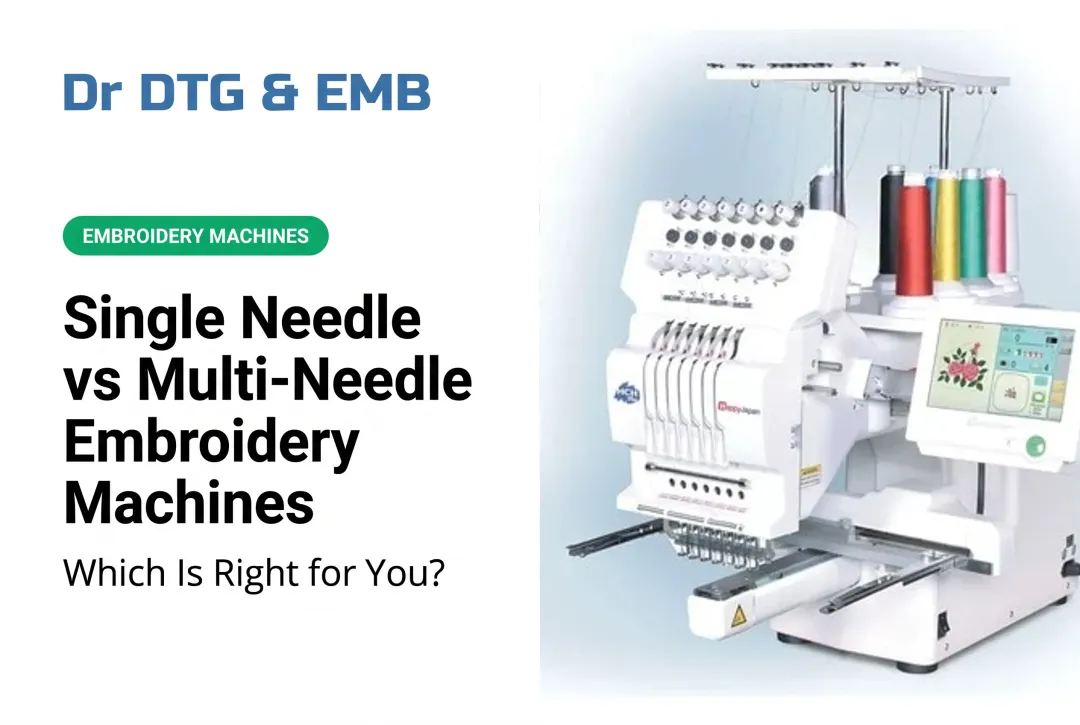
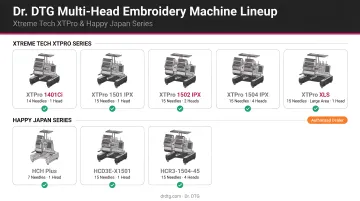
A single-head machine has one stitching head working one garment at a time. "Single head" is not the same as single needle - most commercial single-heads carry 14-15 needles for automatic multi-color work. Happy Japan Commercial Embroidery Machines such as the HCD3E-X1501 (15-needle) and compact HCH Plus (7-needle), plus Xtreme Tech Pro Series XTPro 1401Ci and XTPro 1501 IPX, are commercial single-head platforms built for growing shops.
Who Should Run Single-Head
- Startups and space-limited commercial shops
- Custom apparel decorators with varied designs
- Personalization businesses across caps, shirts, bags, and towels
- Sample and rush one-offs beside larger production
The Fleet Advantage
According to Melco and The Embroidery Warehouse, a network of single-heads keeps stitching when one unit stops for a break, hoop change, or service - unlike a multi-head where all heads can halt together. For mixed queues, that independence is real capacity insurance.
Dr. DTG supports Happy Japan single-heads and Xtreme Tech Pro Series single-heads with OEM parts, field-technician options in Southern California, and depot repair nationwide - so downtime stays short.
What Is a Multi-Head Embroidery Machine?
A multi-head machine runs two or more stitching heads on the same design at once. Common configurations: 2, 4, 6, 8, 12 heads. Barudan and other industrial lines scale even higher. You cannot run different designs on different heads of a traditional multi-head - for design variety, keep single-heads in the fleet.
Who Should Run Multi-Head
- Workwear and uniform suppliers on large same-design batches
- Corporate branding and promo merchandise with consistent B2B volume
- School and sports seasonal runs
- Contract shops fulfilling distributor or brand accounts
Business Outcomes and Downtime Tradeoffs
Multi-head shines when one operator manages multiple garments and cost-per-piece drops. The tradeoff: a thread break or mechanical stop can idle every head until cleared - so preventive maintenance, Isacord-quality thread, correct needles/backings/bobbins, and certified repair matter more at scale.
For shops ready to step up, Dr. DTG carries:
- Xtreme Tech Pro Series XTPro 1502IPX - 2-head, 15 needles per head - double simultaneous output
- Xtreme Tech Pro Series 4-head configurations and XTPro XLS large-area options as volume grows
- Happy Japan HCR3-1504-45 - 4-head commercial batch production
- Single-head feeders: XTPro 1401Ci, XTPro 1501 IPX, Happy Japan HCD3E-X1501 / HCH Plus
Which Setup Fits Your Growth Stage?
Choose Single-Head If
- You are in the first growth years with varied designs
- Small batches and custom work dominate
- You want to add machines incrementally as cash flow allows
- Personalization and mixed SKUs are the model
Choose Multi-Head If
- Large same-design orders are already on the calendar
- You have floor space and at least one dedicated operator
- B2B uniforms, workwear, or promo volume is the core model
- Labor cost per piece is the constraint you must fix
The Hybrid Fleet Strategy Most Shops Use
Start commercial on a strong single-head (Happy Japan or Xtreme Tech Pro Series), build clients, then add XTPro 1502IPX or Happy Japan multi-head for batch work while single-heads stay on samples and custom jobs.
Dr. DTG common paths:
- Single-head 15-needle to 2-head XTPro 1502IPX
- Scale to 4-head as contracts grow
- Trade-in credit on Happy Japan, Tajima, Brother, Barudan, Melco, SWF, and more
- Financing aligned with production cash flow
Not sure where you sit? Consult a technician at 714-770-0969 for a free pre-purchase consultation. 23+ years of matching machines to order books - not just selling the largest frame on the floor.
Conclusion
Single-head is the right foundation for most growing commercial embroidery and print shops: flexible, capital-efficient, and expandable. Multi-head earns its place when same-design volume is real, not aspirational. Many successful shops never abandon single-head - they add multi-head beside it.
Dr. DTG partners for the long term: demos, hands-on training, certified repair, Isacord thread, needles, backings, bobbins, and DTG inks/pre-treatments for hybrid print floors. Book a demo or call 714-770-0969 before you commit capital.
Frequently Asked Questions
What is the difference between multi-needle and multi-head?
Multi-needle means multiple needles on one single stitching head for automatic thread color changes. Multi-head means multiple stitching heads. A machine can be single-head and multi-needle at once - that is the standard commercial starting point.
Can single-head outperform multi-head?
On mixed work and uptime resilience, a fleet of single-heads often can - one stoppage does not idle the whole floor. Multi-head wins on same-design batch cost-per-piece.
How many heads do I need?
- 1 head: Growing shops and custom mix
- 2-4 heads: Consistent same-design B2B volume (e.g. XTPro 1502IPX)
- 6-12 heads: Large contract production environments
Is multi-head worth it?
Yes when large same-design orders are regular and labor/space math works. If work is still varied and small-batch, single-head fleets usually win first.
Can each multi-head run a different design?
No on traditional multi-head. Use independent single-heads for concurrent different designs.
What is the price difference?
Commercial single-heads often land in the mid-teens to low-twenties (USD) depending on model; multi-head scales higher with a higher upfront cost. Call Dr. DTG at 714-770-0969 for current Happy Japan and Xtreme Tech Pro Series pricing.