Introduction
The embroidery machine market hit $1.27 billion globally in 2026, according to Mordor Intelligence, with US commercial embroidery services near $1 billion. Manufacturers shipped stronger automation, larger fields, and wireless transfer across mid-range and commercial lines - which also means more ways for a growing shop to buy the wrong machine.
Two expensive mistakes still dominate: overpaying for built-in design libraries you will never use, and underbuying field size and needle count - hard limits no software update can fix. This 2026 guide is written for growing commercial embroidery and print shops scaling production or upgrading toward multi-head - with clear callouts to Happy Japan Commercial Embroidery Machines and the Xtreme Tech Pro Series (XTPro 1401Ci, XTPro 1501 IPX, XTPro 1502IPX, XTPro XLS).
Dr. DTG has spent 23+ years pairing shops with production equipment, hands-on training, Isacord supplies, and certified repair - long-term partnership, not a one-time crate drop.
Key Takeaways
- Wireless transfer and large touchscreens are common; field size and needle count still decide what jobs you can take
- Single-needle suits hobby samples; multi-needle commercial is the baseline for business production
- Happy Japan Commercial Embroidery Machines and Xtreme Tech Pro Series platforms are the 2026 production picks for shops that need output, hat capability, and less downtime
- Warranty, training, and field-technician access belong in every quote
- Budget Isacord thread, needles, backings, and bobbins as production infrastructure
What to Look for in a 2026 Commercial Machine
Field Size, Speed, Needle Count
- 4" x 4" - samples and tiny emblems only
- 5" x 7" - light commercial left-chest floor
- 9" x 12"+ - jacket backs, large logos, serious production versatility
Commercial multi-needle SPM often reaches 1,000-1,500 on flats (Happy Japan HCU2 class up to ~1,500 SPM). Consumer combo units near 650 SPM are not the same duty cycle.
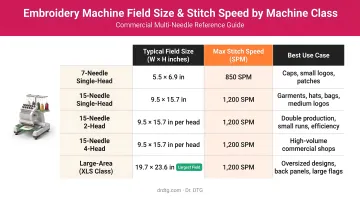
Needle count separates hobby from business. Multi-needle holds thread colors simultaneously - automatic color changes that recover hours every week on multi-color logos.
Connectivity and Software
Expect Wi-Fi/LAN, USB backup, and compatibility with Wilcom, Hatch, and major commercial digitizing workflows. Built-in libraries are convenience; custom digitized files are the commercial reality.
Warranty and After-Sale Support
When income depends on uptime, ask:
- What is covered, component by component?
- Field technician or depot only?
- OEM parts on the shelf or weeks of waiting?
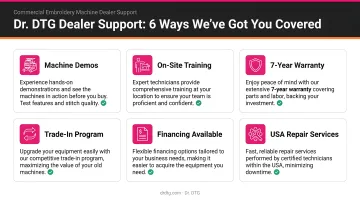
Dr. DTG (BBB A+, Brea, CA, since 2003 / 23+ years) backs Xtreme Tech Pro Series machines with multi-year warranty options, in-house technicians, OEM parts, and hands-on training - the difference between a mid-run stoppage and a recovered shift.
Best New Embroidery Machines of 2026 (Commercial Lens)
Consumer and prosumer units still matter for samples. Production buyers should read the commercial section first.
Brother SE700 / SE2000 - Sample and Learning Tier
Accessible single-needle combo machines with wireless conveniences. Useful for art tests and skill building - not for commercial multi-color volume, hats at scale, or multi-head growth paths.
Baby Lock Altair 2 - Premium Single-Needle Ceiling
Large single-needle field and high SPM for advanced home/prosumer work. If your shop needs automatic color changes and tubular/cap production, multi-needle commercial is still the correct category.
Janome MB-7 - Light Multi-Needle Bridge
Seven needles remove some color-change pain for small-batch sellers. Growing commercial shops usually standardize on 14-15 needle commercial heads with industrial support.
Happy Japan Commercial Series (via Dr. DTG) - 2026 Production Core
| Model | Configuration | Business Outcome |
|---|---|---|
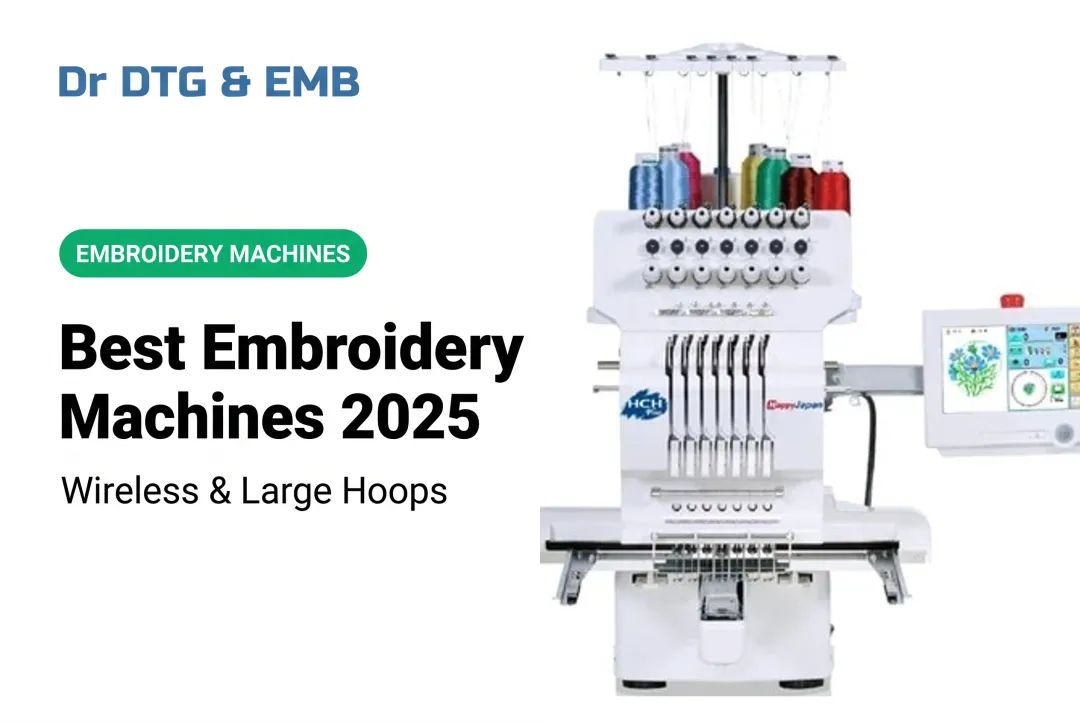
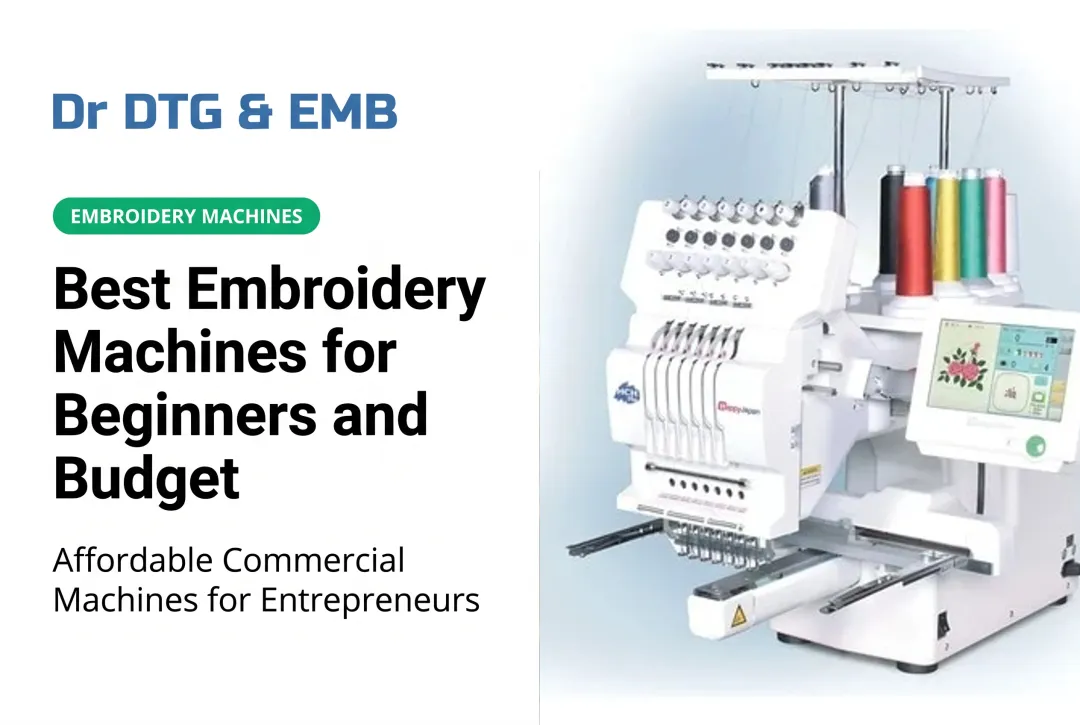
| HCH Plus | 7 needles, single head | Compact commercial entry, limited space |
| HCD3E-X1501 | 15 needles, single head | Complex multi-color logos without rethread |
| HCR3-1504-45 | 15 needles/head, 4 heads | Batch production - multiply simultaneous output |
Pricing is quote-based with demos. Contact 714-770-0969 or info@drdtg.com for current packages, financing, and trade-in.
Xtreme Tech Pro Series (via Dr. DTG) - Scale and Multi-Head Path
| Model | Role |
|---|---|
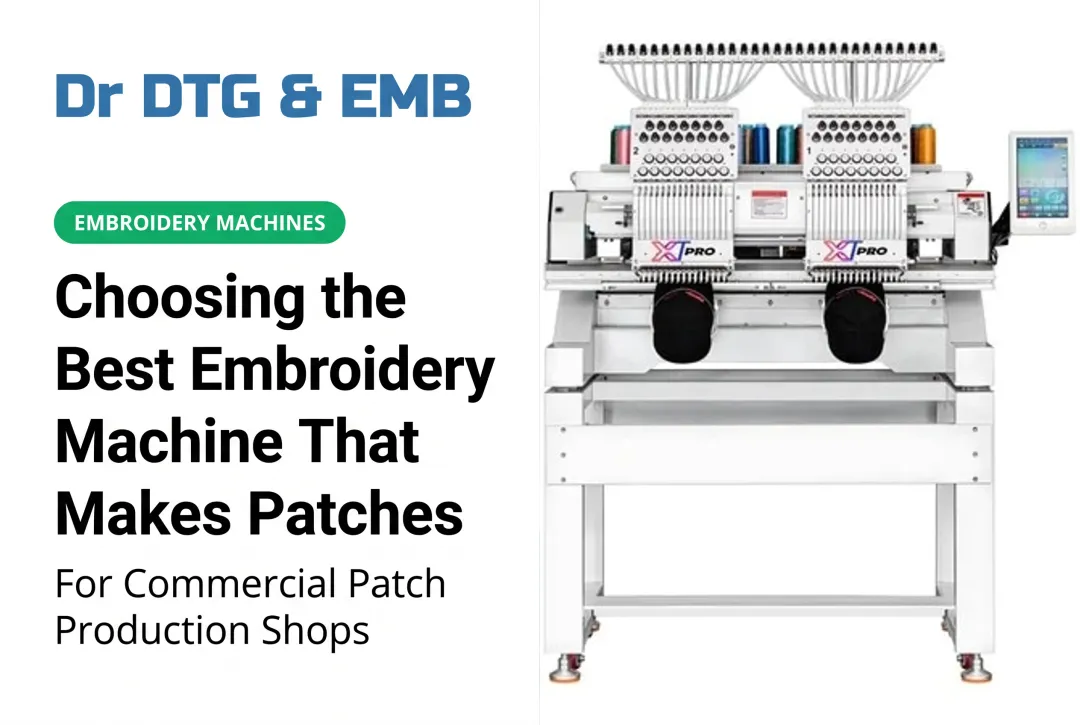
| XTPro 1401Ci | 14-needle entry commercial single-head |
| XTPro 1501 IPX | 15-needle IPX presser-foot control for mixed materials, caps, dense work |
| XTPro 1502IPX | 2-head - double simultaneous output when volume arrives |
| XTPro XLS | Large-area production placements |
What buying through Dr. DTG adds in 2026:
- Multi-year warranty options on qualifying XTPro machines
- In-house technicians and OEM parts in Brea, CA
- On-site repair (SoCal) and depot repair (US)
- Pre-purchase demos and hands-on training
- Trade-in on major brands
- Financing options
- Isacord Master Distributor inventory - thread, plus needles, backings, bobbins; DTG inks and pre-treatments for hybrid print shops
How We Selected These Machines
- Field size as a hard filter
- Needle count vs real commercial use
- SPM within class
- Connectivity for production workflow
- Digitizing compatibility
- Warranty and certified repair access (weighted heavily for business)
- Built-in design count last - marketing metric, not capacity
Price tier and growth path (single-head to multi-head) closed the list. Every commercial recommendation is a production tool, not a compromise hobby pick.
Conclusion
The best embroidery machine in 2026 is the one matched to your order book with room to grow - multi-color throughput, hat capability, less downtime, and a partner who trains operators and stocks Isacord supplies. Happy Japan Commercial Embroidery Machines and the Xtreme Tech Pro Series (XTPro 1401Ci, XTPro 1501 IPX, XTPro 1502IPX, XTPro XLS) are built for growing commercial embroidery and print shops, not weekend monogramming.
Dr. DTG has served the industry for 23+ years. Book a demo, consult a technician, or order supplies at info@drdtg.com or 714-770-0969.
Frequently Asked Questions
What is the latest technology in embroidery machines?
Wireless design transfer, larger touchscreens, app monitoring, and modern digitizing platforms (including current Wilcom releases). For shops, the durable advantages remain multi-needle automation, commercial fields, and support infrastructure.
How much does a good commercial machine cost?
Commercial multi-needle single-heads commonly start in the multi-thousand range and scale with needles and heads. Always quote machine + training + warranty + Isacord/backings together. See cost and finance resources.
What styles are trending for production?
Branded apparel, 3D puff caps, and custom corporate merch - all needing consistent multi-color output (ASI POD research continues to show embroidery inside on-demand mixes).
Single-needle vs multi-needle?
Single-needle: manual color changes - samples only at scale. Multi-needle: automatic color changes - commercial standard.
What should a small commercial shop prioritize?
14-15 needles preferred, commercial field size, cap capability, SPM under real materials, and certified repair. Supplies: Isacord, needles, backings, bobbins.
Do machines include digitizing software?
Basic onboard libraries and transfer apps are common. Professional digitizing is usually separate - confirm compatibility before you buy.