Introduction
The gap between a hobby setup and a production floor used to be obvious: cables everywhere, tiny 4"x4" hoops, and USB hunts between every job. Wireless transfer and large fields closed part of that gap on paper - but growing commercial embroidery and print shops still need multi-needle automation, hat capability, certified repair, and supply continuity to turn connectivity into revenue.
This guide evaluates machines on field size, connectivity, stitch quality, and scalability for shops scaling production or preparing for multi-head. We lead with Happy Japan Commercial Embroidery Machines and the Xtreme Tech Pro Series (XTPro 1401Ci, XTPro 1501 IPX, XTPro 1502IPX, XTPro XLS) - the platforms that deliver business outcomes: higher output, less downtime, cap embroidery, and field-technician support - then note capable prosumer wireless options for sample work only.
Dr. DTG has spent 23+ years placing commercial equipment with hands-on training and long-term partnership support.
Key Takeaways
- Wireless transfer and large fields reduce friction; multi-needle commercial duty cycles create capacity
- Budget wireless single-needle units help samples; production shops standardize on 14-15 needle commercial heads
- Happy Japan and Xtreme Tech Pro Series platforms scale from compact single-head to multi-head batch work
- Isacord thread, needles, backings, and bobbins protect consistency at commercial SPM
- Dealer training and certified repair belong in every "best machine" decision
Why Wireless and Large Fields Matter - And What They Do Not Replace
Wireless Design Transfer
Wi-Fi/LAN transfer sends stitch files from laptop or phone to the head without USB shuffle. Monitoring apps can flag breaks and completion. That speed helps - it does not replace automatic color changes, industrial frames, or service when a head is down.
The Real Cost of a Small Hoop
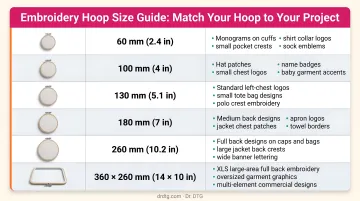
A 4"x4" hoop limits monograms and patches. Shirt logos, totes, and jacket backs force re-hooping. Impressions Magazine notes improper hooping drives shift, distortion, puckering, and hoop burn. Every extra hooping is another defect opportunity.
| Hoop Size | What It Covers |
|---|---|
| 4" x 4" | Monograms, small logos, patches |
| 5" x 7" | Standard left-chest class work |
| 6" x 10" | Larger garments and tote work |
| 9.5" x 14" | Jacket backs and complex layouts |
Best Machines for Growing Shops: Wireless Context, Commercial Priority
Happy Japan Series (via Dr. DTG) - Commercial First
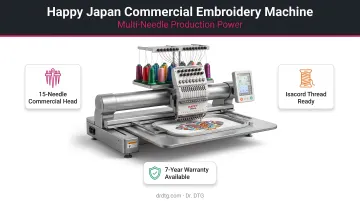
Happy Japan Commercial Embroidery Machines through Dr. DTG (BBB A+, Brea, CA, 23+ years) include:
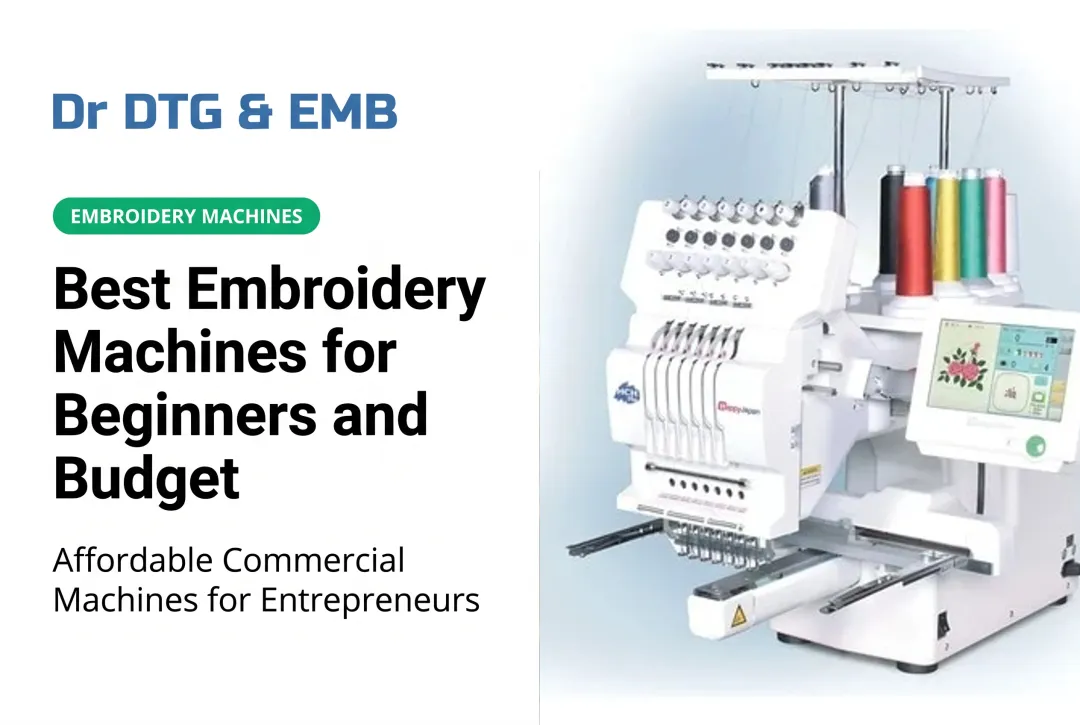
- HCH Plus - 7-needle compact commercial entry
- HCD3E-X1501 - 15-needle single-head multi-color workhorse
- Multi-head configurations up to 4 heads (e.g. HCR3 class) for batch output
Multi-needle automatic color changes keep production moving on complex logos without constant operator intervention. Tubular arms handle finished garments and caps without flatbed limits - a direct path to hat revenue.
| Feature | Details |
|---|---|
| Needle Configuration | 7-needle (HCH Plus), 15-needle (HCD3E-X1501), multi-head options |
| Garment Capability | Tubular arm for finished garments and caps |
| Connectivity | Commercial USB/LAN/Wi-Fi options by model - confirm current specs |
| Warranty / Support | Multi-year options; training; certified repair |
| Best For | Growing commercial embroidery and print shops |
| Pricing | Quote - book a demo: 714-770-0969 / info@drdtg.com |
Xtreme Tech Pro Series (via Dr. DTG) - Scale Path
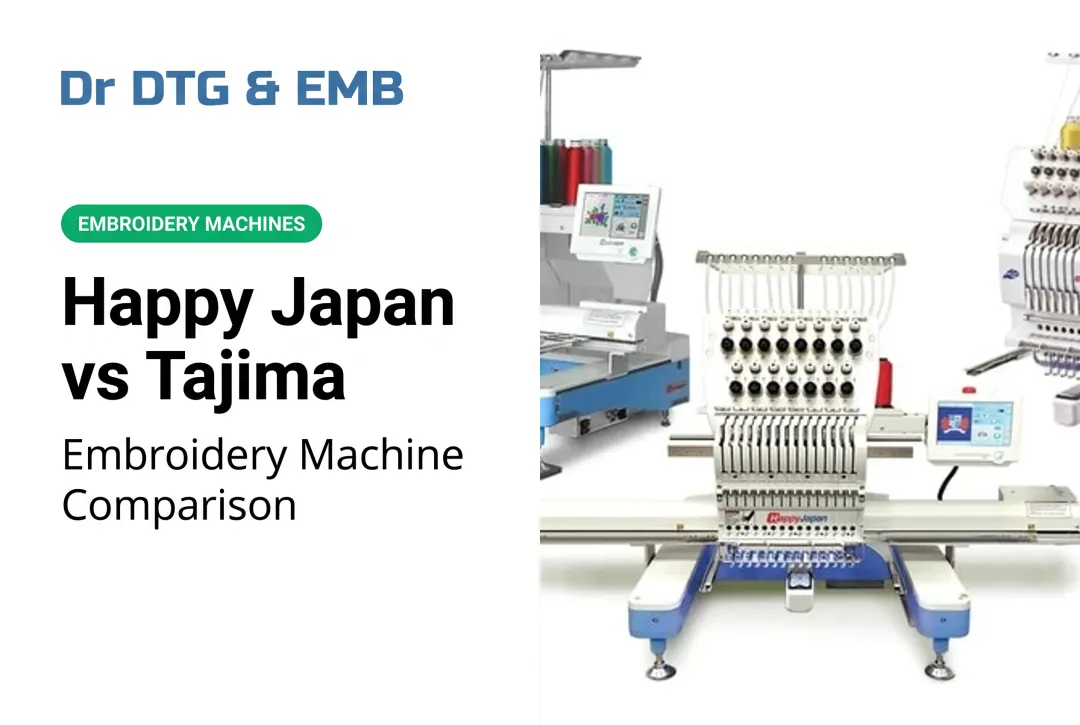
Compare side by side with Happy Japan under one partnership:
- XTPro 1401Ci - 14-needle entry commercial
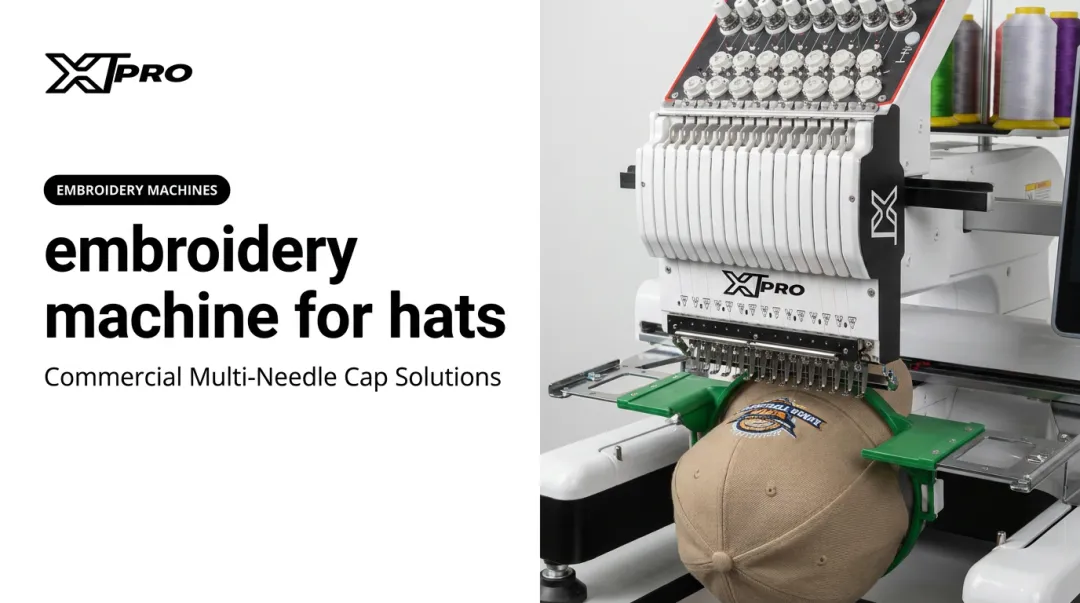
- XTPro 1501 IPX - 15-needle Independent Presser Foot Control for mixed materials and dense/hat work
- XTPro 1502IPX - 2-head to double simultaneous output
- XTPro XLS - large-area production
Business outcomes: higher piece counts, fewer mid-job stops, less downtime with OEM parts and technicians, clear multi-head upgrade path.
Baby Lock Flare / Reflection - Prosumer Wireless Large Field
Strong single-needle Wi-Fi and large-field options for advanced home or sample rooms not yet ready for a full commercial machine (Flare ~6.25"x10.25"; Reflection 9.5"x14" with IQ monitoring). Valuable for design development - not a substitute for multi-needle commercial production heads when orders are the KPI.
Janome Memory Craft 550E Class - Wide Single-Needle Field
Wide single-needle fields and solid construction for serious hobby/studio work. Confirm current Limited Edition availability. Production shops still need multi-needle automation for multi-color volume.
Brother SE2000 - Wireless Entry Sample Machine
Combined sewing/embroidery with Wi-Fi and ~5"x7" field near accessible pricing. Sensible for testing workflows before commercial capital - not the long-term head for a scaling shop.
How We Chose
Primary: commercial field size, multi-needle automation, connectivity that fits production, real duty cycle
Secondary: thread-change efficiency (multi-needle wins), manufacturer/dealer warranty and certified repair, scalability to multi-head
Supplies: Isacord 40wt polyester consistency at speed
Avoid ranking by built-in design count. A library of 300 designs on a 4"x4" field still cannot take jacket-back work.
Thread Quality
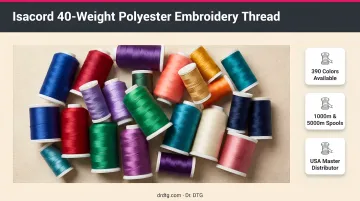
Isacord from AMANN - 40-weight trilobal polyester, 390 colors - is engineered for machine embroidery on uniforms, sportswear, and high-wash goods. Dr. DTG is USA Master Distributor (1,000m and 5,000m spools, kits available). Stock matched needles, backings, and bobbins; hybrid shops can add DTG inks and pre-treatments under the same partnership.
Conclusion
In production terms, wireless connectivity and a large embroidery field are table stakes - not upgrades - at different price points. For growing commercial embroidery and print shops, the machines that move the P&L are multi-needle commercial platforms with hat capability, training, certified repair, and Isacord supply continuity - Happy Japan Commercial Embroidery Machines and the Xtreme Tech Pro Series (XTPro 1401Ci, XTPro 1501 IPX, XTPro 1502IPX, XTPro XLS).
Dr. DTG has placed and serviced production equipment since 2003. Book a demo, consult a technician, or order supplies at 714-770-0969 or info@drdtg.com.
Frequently Asked Questions
What are the best embroidery machines for production-focused buyers?
Multi-needle commercial lines such as Happy Japan HCD3E-X1501 / HCH Plus / multi-head and Xtreme Tech Pro Series XTPro 1401Ci / 1501 IPX / 1502IPX / XLS. Match field, needles, and support to volume. See also best new machines.
What is the best manufacturer for commercial work?
Japanese commercial builders like Happy Japan are respected for reliability and long service life. Xtreme Tech Pro Series is a strong parallel path with IPX control and multi-head step-ups via Dr. DTG.
What does wireless design transfer mean?
Sending stitch files over Wi-Fi/LAN from computer or phone - no USB required. Useful; still secondary to multi-needle capacity and repair access.
What hoop size for a commercial shop?
Plan beyond 4"x4". 6"x10"+ covers many garments; 9.5"x14" class fields unlock jacket backs. Commercial Happy Japan and XTPro fields are specified per model - confirm in a demo.
Is a large hoop worth it?
Yes for production - fewer re-hoopings, fewer registration errors, broader job acceptance.
Single-needle vs multi-needle?
Single-needle: manual color changes, mostly flatbed limits. Multi-needle (commonly 6-16 needles): automatic colors, higher speed, tubular/cap work - the commercial standard.